Showing posts with label My Heroes. Show all posts

Wednesday, March 26, 2014

What We Can Learn From Leslie Jordan

Brace yourselves. I'm about to use a baseball metaphor.

Last Sunday night, we delighted in seeing character actor Leslie Jordan performing Show Pony, a one-man performance about his recent Hollywood adventures. When I wasn't laughing out loud at his breathlessly recounted stories, I couldn't help but admire what he has accomplished.

OK, now the baseball metaphor. As far as traditional Hollywood goes, Leslie Jordan had three 'strikes' against him—and still managed to hit a home run.

Arriving in Los Angeles in 1982 with "dreams as big as the California sky," Leslie's first potential strike was his height. At 4 feet 11 inches, he wasn't exactly of leading-man stature.

Then there was his deep Tennessee accent, which apparently hasn't diminished despite living in Los Angeles for over 30 years. Leslie has the kind of accent you could stick a spoon into and it would stand straight up.

The third potential strike? Leslie Jordan is "the gayest man I know," he says. In his book and stand-up show My Trip Down the Pink Carpet, he shares tales of Hollywood directors trying in vain to "butch" him up, such as the time he played an FBI agent in an early TV role.

When you put the pieces together, Leslie's chances of success seemed dim at best. In 1982, he was already 27, which is bordering on retirement age by Hollywood casting standards. He was diminutive, had a thick Southern accent, and was obviously gay. Was he out of his mind, thinking he could have a movie/TV career?

Absolutely. And being out of his mind clearly worked for him.

Leslie confesses on stage and in his book that when he arrived in Los Angeles, he struggled with religious shame and self-confidence, along with alcohol and drug abuse. Despite the internal struggles and the big odds against him, he worked hard, learned how to showcase and fine-tune his inimitable style, became sober, and eventually won an Emmy (for Will and Grace).

Not surprisingly, Leslie has become a hero to the gay community. I think his amazing life illustrates an important lesson for everyone: That our self-perceived limitations can actually be assets in disguise. All we have to do, as Leslie might say, is to learn how "to work it, y'all."
Left to right: Me, Bob Wheeler, Leslie Jordan, Kurt Kleespies, Nick Parham (March 2014)


Saturday, March 8, 2014

Why Do You Ask So Many Questions?

It was a Christmas Eve, and I was being cross-examined.

I was attending a holiday party at the home of Bob Wheeler and Kurt Kleespies, circa 2008. I was seated on the sofa next to Marie Alaimo, in her late 70s at the time, and she was full of questions for me: "Why do people like Facebook so much?" "What was the difference between Facebook and Twitter?" "When would someone use Facebook and not Twitter?"

Marie asked me how I came to be writing a book, what was it about, and my favorite question, "Who would want to read it?" She laughed, realizing the question didn't come out the way she had meant it.

I answered all of Marie's questions and half-jokingly asked one of my own: "Why do you ask so many questions?"

Marie answered that she had always been interested in what people were doing and what they thought or felt about what they were doing. I'd add that Marie's active mind kept her young and vital, connected to others and engaged in the world around her, especially as Parkinson's disease chipped away at her body and eventually made her home-bound. I suspect Marie was particularly curious about younger generations, as she had many friends who were decades her junior.

I had a 'Marie' moment myself not long ago. I was staying with my nephew, Stafford and his wife Deb near Greensboro, N.C. It was a snowy night, but we decided to brave the weather for a night out at a restaurant. On the way, I peppered Stafford with questions about his work while the kids, Ford and Victoria, fiddled with their Apple handheld devices. I could tell Ford was playing a game. I started questioning him about it, asking what the game was, why did he like it, how was it different from other games? Before long, I was playing the game too (despite the fact that I loathe computer games).

At some point during that car ride, I realized I was doing just what Marie would have done, had she been with us. And so I said a silent "thank you" to Marie, who had passed away two weeks earlier.

There are plenty of anti-aging products on the market, but Marie reminded me that one of the best ways to stay young is to never stop asking questions.

And if there is such a thing as Heaven, I bet Marie is there. And man, does she have a lot of questions to ask.


Saturday, January 25, 2014

The Surprising Connection Between a Tape Recording and an Indiegogo Campaign

This is the story of an elderly woman's decades-old tape recording and a young woman's Indiegogo campaign.

The story begins with Marie Alaimo, the elderly woman. At a Thanksgiving party about five years ago, Marie, a marvelous woman of Italian heritage and a life force if ever there were one, brought a tape recording of her singing opera. (She'd been asked to bring it.) The recording had been made decades ago. As Marie played the tape, I thought how rich and nuanced her voice was, how she could have been a professional singer.

Marie had, in fact, dreamed of becoming a professional opera singer. But in the end, she didn't pursue it, because her teacher told her she wasn't good enough.

The Thanksgiving party was held at the home of Bob Wheeler and Kurt Kleespies, and Marie was their good friend. (She called them her "kids.") Now let's fast-forward to 2013. Again, we're at Bob and Kurt's, this time for their annual Christmas Eve dinner. Sadly, Marie, in ill health, is unable to attend.

Bob and Kurt's friend Ricardo Pacheco arrives with a surprise guest, Ricardo's co-worker and a lovely young woman in her late 20s. Her name is Adina Dorband.

Adina Dorband
As the evening progresses, there's an announcement: Adina is here to serenade us. She is an aspiring opera singer who will be traveling to Paris in January to audition for a year-long residency program with the Paris Opera. Adina was running an Indiegogo campaign to raise funds for her audition trip, and Ricardo had generously supported her by contributing to the campaign. In exchange, Adina, a soprano, delighted the gathering by singing Christmas songs.

Afterwards, I ask Adina if she is nervous about her upcoming audition. Stupid question, I thought to myself; who wouldn't be? Sure, she replies. But she says she feels something much stronger: the need to grab this opportunity now.

"I'm 28," Adina says. "It's now or never. Besides," she adds, in what has become my motto for life, "I'd rather face rejection than have regrets."

It is one of those cosmically profound moments in life, where one thing suddenly connects to another in ways you could never have anticipated, and all you can do is be awed by it. It was as if I could actually see the world turning, time passing, life coming full circle. The dreams of one woman passed silently along to another, each with no knowledge of the other.

Adina's Indiegogo campaign was a success, though I don't yet know the outcome of her audition. As for Marie, she had regrets, and who doesn't? But she lived a long rich life, adored by those of us in her 'true' family in San Francisco, until she passed away Jan. 15, 2014 at 85.

Say what you will about the evils of social media. But I can't help but wonder: What if there had been an Indiegogo when Marie was young? Would she have found the support and encouragement she needed to fulfill her dream?

Marie Alaimo

Sunday, June 16, 2013

Father's Day in Photos: Carol W. Martin, Photographer

On this Father's Day, there are stories I'd like to share about my father, the late Carol W. Martin. I have one in particular--about the disastrous time I tried to cook him a steak. But I'll save the stories for another time. Today, I want to share photos.

Which is appropriate, because my father was a professional photographer. Of course, this means that for most family portraits, he was behind and not in front of the camera. Even so, there are some great snapshots of him.

I cherish the following photos of my warm, talented, Virginia-born gentleman father. Nearly 20 years after his death, he is still remembered and revered in Greensboro, where he ran a photography business with his partners for decades. He is still my moral compass. C.W. Martin showed me how to treat others with consideration and respect, how to turn your passion into a successful business, and how to never give up when there's something you really want.

OK, one story: My father graduated from college during the depth of the Great Depression. He was burning up to be a newspaper reporter, but the local newspaper (in Roanoke, Va.), wasn't hiring. Undeterred, he visited the newspaper editor every week for months, reminding him that he wanted to work for the paper. Eventually, a job became available, and my father's career as a reporter--which later led to his photography career--was launched.

Hate the cigarette. Love the effect it gives this self-portrait.
Always ready with a flash bulb ready to pop.

Speaking of popped flash bulbs!
Dad would have loved all the small digital cameras we have today.
The family man reading to my sisters Nancy (left) and Sandi. Though he was often working late, C.W. always made it a priority to spend at least a few minutes every day with his kids. We might not see him all day, but then he'd tuck us in at bedtime and give us little back rubs. In just those few minutes, he gave us the connection to him we needed. 


My grandfather (left) and C.W. were big fishermen. 

C.W., third from left, hangin' with his homeboys. 
I'll just say it: Movie star!

Hard at work as a newspaper reporter.


C.W. loved convertibles. So do I. 

Cute photo of my parents in their early days together. 


Towards the end of his career. Still the dapper gentleman photographer. Sill loved, admired, missed.


Monday, June 10, 2013

A First, and Last, Sip of Cheerwine

Shauna Gamble has been one of my dearest friends since 7th grade. We haven't seen each other in years. We don't call each other much. Time and geography have a way of creating such distances. But in our case, the distance disintegrates as soon as we get on the phone together.

On May 30, Shauna messaged me on Facebook that her father, Martin Wimbs Sr., had just died. I called her right away. Among the many endearing, inspiring, heart-tugging stories she told me about her father, one in particular sticks with me. It involves Cheerwine.

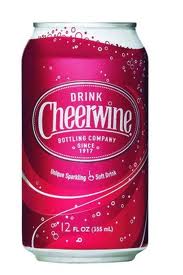
For the uninitiated, Cheerwine is a cherry-flavored soft drink made in North Carolina (where Shauna and her family live and where I'm from). Its distribution is mostly in N.C. and a few neighboring states--though I'm happy to report that BevMo in San Francisco sells it.

Shauna's sister Pam is a Cheerwine devotee. She nearly always carries a can of it, Shauna tells me. On the last afternoon of her father's life, Pam goes to visit him in his hospice room, Cheerwine in hand. Her father notices the red soft drink can. Though he'd never tried the drink before in his 86 years, he was curious about it. He asks Pam for a taste. She obliges.

"That's pretty good," he says afterwards. And other than perhaps a sip or two of water, that swig of Cheerwine was his last drink.

It was a small moment. But not to me.

Shauna's father's was a successful business executive for many years at Blue Bell in Greensboro, which made Wrangler jeans. He was a devoted husband, married for 65 years to Shauna's mother, Nelle. He was a beloved father, grandfather, great-grandfather.

But Martin Wimbs Sr. was also an adventurer. After high school, he became a Merchant Marine; he loved the sea and sailing. In his business career, he worked in and traveled to over 54 countries, including Egypt, Morocco, India, Thailand, Argentina, and countries I can't even pronounce. He flew private planes.

With his Cheerwine request, Shauna's father was still exploring. Think about it: How many people do you know who, facing imminent death, would want to try something new?

Most of us say we love adventure. I suspect the truth is, in our stressful world, we prefer comfort-- especially as we grow older, and even more so when we become seriously ill. But comfort, whichever stage of life we're in, can be a cage. Adventure is what sets us free, helps us grow. Martin Wimbs, Sr., right up to his last few minutes, never lost sight of this. He was what I aspire to always be: free.
Martin Wimbs, Sr.

Monday, June 25, 2012

Hollywood to Dollywood: Why The Lane Twins Are This Summer's Real Movie Heroes

Allow me to ask a few questions about this summer's movies.

Did The Avengers leave you thinking about your goals and dreams and how you might achieve them? Did Abraham Lincoln: Vampire Hunter have you questioning your relationship to your parents and what's getting in the way of those relationships? Did Prometheus stimulate any thoughts whatsoever other than how a young woman could possibly perform a C-section on herself and then run around a space ship?

I'd venture to say the answer to all of the above is 'no.' Why? Because, in my view, none of the people involved in the making of these films took risks. They relied upon the safety of known comic books and a popular novel. They rebooted a dormant but once-lucrative sci-fi franchise. They didn't challenge themselves or their audiences. And for their efforts, they're floating on inner tubes across vast oceans of money, a margarita in each hand.

Meanwhile, there's Hollywood to Dollywood.

The independent documentary recently had two showings at Frameline, San Francisco's annual LGBT film festival, following more than 50 festival showings around the world. (The Huffington Post has a detailed story about the film worth reading.) 
Hollywood to Dollywood is about two twin brothers, Gary and Larry Lane, both gay, from my home state of North Carolina. The Lane twins, who currently live in Los Angeles, wrote a screenplay entitled Full Circle, which includes a part they wrote with Dolly Parton in mind. They love Dolly (who doesn't?), and they really want her to be in their film.

So how would these two young up-and-coming actors/models/screenwriters get someone of Dolly's stature to even consider their screenplay? How would they fast-forward past all the non-responses and rejections that inevitably await the vast majority of scripts by unknown screenwriters?

They made a movie about it.

Venturing Into Tornado Winds and Flood Waters

More specifically, the Lane twins made a charming, funny, suspenseful, and unexpectedly touching documentary about their cross-country trip from Hollywood to Dolly's theme park in Tennessee. Their goal: To hand-deliver their script to Parton during the 25th anniversary of Dollywood, a time when they knew exactly where she would be and when.

The Lane twins on the road to Dollywood
These guys rented an RV (which they nicknamed Jolene), assembled a tiny crew, and made the trek--venturing into tornado conditions and flood waters along the way--without any assurance they'd actually make contact with Parton.

Sure, they had some reasonable hopes, as we all know Dolly is a genuine and benevolent person. (By comparison, can you imagine making a trek cross-country in hopes of getting Patti LuPone to read your script?) But the Lane twins took a big risk--something that so many in Hollywood and on Broadway today wouldn't dream of doing. They invested time and money and emotion into filming a story the ending of which they couldn't possibly know.

That alone earns my heartfelt admiration. But the movie also spoke to me on many other levels. As someone who has also toiled on a script (a play) for four years, the Lane twins' guerilla script-submission-tactic is inspiring. I'm already scheming about the unsuspecting hands I'm going to thrust my manuscript into, though I hope I can do it with as much Southern charm and style as the Lane twins.

And their tactic, from a marketing perspective, is absolutely genius. You want to make sure Dolly is aware of how badly you want her to be in your movie? Make a movie about the trip you took to hand your script to her--a documentary, by the way, which has won lots of festival awards.

Leslie Jordan
I don't want to imply Hollywood to Dollywood is simply some shameless exercise in self-promotion. Yes, it's a story about ambition and living your dreams, however corny that may sound. But what gives the film such heart is that, ultimately, it's the story of two gay men who want to fully 'be seen' and accepted by their mother, whose religious beliefs has yet to allow that to happen.

All This, and Leslie Jordan, Too

That's the quiet sadness that runs throughout the film, though there are many comic high points--including cameos by the likes of Will & Grace's Leslie Jordan, the diminutive Southern comic actor.

The Lane twins come across as sweet, adorable, handsome, funny, intelligent, genuine Southern men of whom anyone would be proud. I'm happy to report that Nick and I had a chance to talk to them after a Frameline screening, and in 'real life' they're exactly as they are in the film. One minute of talking to them and you feel as if you've known them for years--or wish you had.

I could go on and on, but I'll close where I started: with The Avengers, Abe Lincoln: Vampire Hunter, and the woman who gave herself a C-section in Prometheus. They're Hollywood's safe, risk-free action heroes. But for me, the real super heroes of the summer movie season, of the entire year in fact, are the Lane twins. And if you're at all interested in seeing their story, please buy the Hollywood to Dollywood DVD. It's only $20. You'll be supporting some terrific young Southerners. Ten percent of the sales go to Dolly's Imagination Library, which provides books to children. And most of all, it's a memorable movie. Besides, $20 is less than you paid for two tickets (plus popcorn) to see The Avengers--a movie you've probably already forgotten by now.

Postscript: Here's a recent Virgin America commercial featuring the Lane twins you may enjoy.


Friday, June 22, 2012

Elvis, Marilyn, Jim Morrison Holograms Coming Soon. But What About Bette?


The following is an update and expansion of an earlier blog post:
Broadway producers, I have an idea for increasing your ticket sales, going viral on social media, and injecting an element of shock and awe into your productions.

All you need are a few well-chosen holograms of dead celebrities.
This whole hologram thing came to life, so to speak, back in April, when the late Tupac Shakur performed "live" in concert with Dr. Dre and Snoop Dogg at the Coachella Valley Music and Arts Festival.
Since then, the concept of insinuating dead performers into live shows is getting legs. Michael Jackson, Elvis Presley, Marilyn Monroe, Jimi Hendrix, and Jim Morrison may all soon appear on stages again through technological magic (or sorcery, depending upon your view). Jim Morrison may even walk right up to you, look you in the eye, and sing to you, according to Entertainment Weekly. For the long-cold musician, perhaps it will be “Come on baby, light my fire”?
Most of this is just talk for now, except for Tupac. His likeness was projected onto a piece of glass on the concert stage, which then bounced the image onto a Mylar screen. Upon seeing photos of Tupac in the Coachella show, my first thought was: Look at those abs. Tupac should've changed his name to Sixpac.   
My second thought: Who else would I like to see digitally resurrected from the dead and interjected into stage productions?
Bette Davis, of course.
Let's say you're at a Broadway play and there's a scene in which two pretentious characters start speaking French to one another. Suddenly, in vivid black and white, there's Bette Davis as Margo Channing in All About Eve, quipping "Enchante to you, too!" That would certainly perk up the audience, n’est-ce pas?
You could make a Bette Davis hologram a recurring gag on Broadway. Audiences would never know when or where Dead Bette might appear and make a bitchy remark. In the recently closed Death of a Salesman, for instance, Bette as Regina in The Little Foxes could have suddenly materialized and said coldly to Philip Seymour Hoffman: "I hope you die. I hope you die soon. I'll be waiting for you to die."
Or how about this? Immediately after a love scene in a play, suddenly there's Bette from Of Human Bondage, shrieking contemptuously: "After ya kissed me, I always used to wipe my mouth! WIPE MY MOUTH!"
Some other late, great, dearly missed performers I'd love to see pop up 'live' on stage, in no particular order:
* John Gielgud from Arthur. Whenever a character makes a boring or predictable announcement, Gielgud, as Dudley Moore’s sass-talking butler, would roll his eyes and say sarcastically, “I’ll alert the media.”
* Dixie Carter from Designing Women. No one went off on a tirade more fabulously than Carter. Imagine a dull scene (take your pick) in Spider-Man: Turn Off the Dark, when, quite unexpectedly, Carter shows up to deliver her famous “And that’s the night the lights went out in Georgia!” speech. The result would be spontaneous, heartfelt, thunderous, leaping-out-of-the-seat applause, the likes of which I doubt the Spider-Man producers have experienced.
* Marty Feldman from Young Frankenstein. Want to squeeze a laugh from a script that is supposed to be funny but isn’t? Whenever you feel the audience’s attention waning, simply flash Feldman’s face on stage, with his cockeyed, impish smile. Even better, have him announce that his name is “Aye-gor,” not “Ee-gor.” And while we’re at it, throw in Cloris Leachman (who, fortunately, is still very much alive) proclaiming, “He vus my boyfriend!”
* Joan Crawford from the British horror movie Berserk!, in which she tromped around a three-ring circus sporting tights and a three-ring bun on her head. Picture a digital hologram of circus queen Joan, jumping from one swing to another effortlessly, high above the stage (Spider-Man again?) pausing to peer down with disapproval at the goings-on and command, “Clean up this mess!” To get an idea of a hologram Joan Crawford’s potential, check out the YouTube video in which Rick Santorum, in a TV interview, gets repeatedly ‘Joansmacked.’ And here's the latest Joansmacked video:


OK, let’s recap by doing the math: Holograms of Bette, John, Dixie, Marty, and Joan + viral sensations = theatrical riches. You’re welcome, Broadway!


Wednesday, May 23, 2012

Uncle Stafford's 85th Birthday Party: Tales of Fried Chicken & Gin in the Baptist Ladies' Punchbowl

It's my Uncle Stafford's 85th birthday party, a big, happy affair with my entire family gathered around a long banquet table at a restaurant. Stafford and his younger brother--my father--are in rare form, telling stories on each other.

It starts with the fried chicken.

When my father, C.W. Martin, and Stafford were boys in Virginia and it was Sunday night, it was more than likely going to be fried chicken for supper. Stafford and C.W. would watch their mother grab a live Rhode Island Red chicken in the backyard, hang it upside down, tie its feet to a clothesline, whack its head off, and throw the head into the bushes--all the time singing a Baptist hymn like Old Rugged Cross. Stafford and C.W.'s job was to pluck the hapless bird after it had been scalded.
Uncle Stafford (left) and my father, C.W. Martin, in Roanoke, Va.
"It was terrible to watch," my father says.

"But man oh man," Uncle Stafford pipes in, "that was the best fried chicken you'd ever eat." 

A waiter appears and wants to know if Stafford would like something to drink. "I believe I've earned a gin and tonic, don't you?," Stafford asks.

"Absolutely," the waiter responds, and off he goes, leaving Stafford to launch into another tale about my grandmother.

 "She was a right staunch Baptist, in case y'all hadn't noticed," Stafford says. "One afternoon, she had a women's missionary society group over for punch. My friend Bob---"

"The bald-headed guy with the glass eye?," my father wants to know.

"That's the one. Well, he and I got hold of a bottle of gin, and when Mother wasn't looking, we poured it into the punch bowl."

"Oh my God," my mother says, laughing. "Not the whole bottle?"

"It was just half a bottle," my father replies.

"If it was, it's because you drank the other half," Uncle Stafford jokes.

"I was twelve," says my father.

"Details. Anyhow, all those ladies lapped up that fruit punch. I heard several of them ask Mother for the recipe."

"Did she figure out what happened?" This question comes from my nephew Stafford, named for the man we are here to celebrate.

"No, thank God, because she'd have taken a buggy whip to us if she had," Uncle Stafford replies.

At this precise moment, Uncle Stafford's gin and tonic arrives. He examines the wedge of lime, squirts it into the drink, takes a small sip, and looks around at the presents piled up before him. "Which one of these lovely things wants to be unwrapped first?," he asks mischievously. I push my gift toward him eagerly. He smiles at me warmly and slowly accepts the brightly colored package, unwraps it, puts on his reading glasses, studies it.

"Is it..." he begins.

"A radio. It plays radio stations from around the world, over the Internet," I explain. Uncle Stafford is a radio fanatic, having built them himself when he was young.

He's pleased. "I'll never leave home again," he says. "Thank you, Jimmy."

As a young man, Uncle Stafford used to build radios, first out of crystals, then out of tubes. It was a huge deal when, after working on a radio for what must have been months, there suddenly came a popping, crackling sound, followed by a broadcast from KDKA in Pittsburgh. He and my father danced around like lunatics, whooping it up.

When I was a boy, Uncle Stafford tried--oh so patiently--to teach me how to make a radio. He didn't succeed. "Why build something when you can buy it?," I'd ask. "Because it helps you learn how to think," he'd say. He did manage to infect me with a love for the radio programs of his youth, and during my family's visits to see him, Uncle Stafford and I would spend hours listening to his tapes of old shows. "I think it's time you heard The War of the Worlds," he said to me when I was about 15.

"I saw the movie," I shrugged.

"You don't know the half of it," he said. And so I listened, riveted, as Orson Welles' brilliant 1938 radio hoax--which had most of America convinced an alien invasion was occurring--unfolded. 
Uncle Stafford in uniform
Uncle Stafford's mastery of radios was put to use during World War II. He enlisted, rather than waiting to be drafted, and soon enough found himself operating the radio on a B-25 bomber over the Pacific. It was there, over the dense Burmese jungles in October 1944, my Uncle Stafford's plane was shot down.

His body was never recovered.

Only his "dog tag" and those of his six fellow crew members were discovered and later buried in the Louisville National Cemetery in Kentucky. You see, the truth is that my Uncle Stafford never had an 85th birthday; he didn't make it past 36.

Though the stories of him and my father I've shared actually happened, the party and my experiences with Uncle Stafford are only something I wish were true. He died 14 years before I was born.

On more than one occasion, I've imagined watching him surrounded by our family, celebrating a landmark of old age, laughing as he and my father needled each other yet again--their way of showing affection. And at this imaginary 85th birthday party, amidst the clatter of cutlery and glasses and conversation, I sit next to my beloved uncle. In this moment, I have his complete attention, so I look him in the eyes, I squeeze his hand, and I say "Thank you." I know he understands exactly what I mean, because he squeezes my hand back.


Friday, December 23, 2011

Another Dec. 25 Birthday Worth Celebrating - Quentin Crisp

I'd like to state that by the time Nick and I met him, Quentin Crisp--born December 25th, 1908--was famous. Of course, if he and his mauve hair were still inhabiting this planet, and Lord knows I wish they were, Quentin would quickly correct me by insisting he was merely "notorious."

Either way, at the time I became aware of his glorious existence (the early 1980s), Quentin Crisp was listed in the Manhattan phone book. Despite his notoriety, he believed--insisted--on being completely "available." He adored strangers in general, Americans in particular. 

After reading his witty, wise, and brave autobiography The Naked Civil Servant, which I still consider among my favorites, I passed the book onto Nick. He became equally enamored. Not long after, on a business trip to New York, Nick rang up Quentin.

Edward (left), Quentin Crisp, me, Nick, circa 1985
"Oh yesssss?," Quentin would answer. (This is how he always answered his phone.) He and Nick arranged to meet for lunch. When Nick told me about their date later, I was jealous. And so, on a New York vacation about six months later, Nick, our friend Edward, and I had lunch with Quentin. It was the first of multiple, delightful encounters with one of the world's true wits, gifted raconteurs, and one of my personal heroes.

Can one be sincere and highly theatrical at the same time? If so, Quentin was. I believe he sincerely loved being completely open and available to strangers, but at the same time, he rarely missed an opportunity to play the role of Quentin Crisp. For example, during a dinner I had with him on another New York visit, he brought along his mail. At one point, he handed over his E.F. Hutton investment account statement. "What do you suppose Mr. Hutton wants with me now?," he asked, seemingly perplexed. He knew exactly what he was doing.

Why was Quentin notorious? Born in England, his name was Denis Pratt "before I dyed it." Once he realized he was homosexual (his preferred term), he "became not merely a self-confessed homosexual but a self-evident one." To put a finer point on it, "I wore makeup at a time when even on women eye shadow was sinful." He "waltzed" around the streets of London in the 1920s dressed exactly as he pleased, in outrageously feminine attire. Needless to say, he was beaten multiple times and arrested. He was undeterred.

In the late 1960s, he published his autobiography, The Naked Civil Servant, which eventually led to more books (most of them delightful reads), a fabulous one-man show, a move to New York, parts in movies and on stage (he played Lady Bracknell in The Importance of Being Earnest). Sting wrote a song about him, Englishman in New York. Several films have been made about him, most notably the 1975 TV version of The Naked Civil Servant and An Englishman in New York (2009), both starring John Hurt.

Quentin's thoughts about developing a style that is uniquely and immediately recognizable as yours may seem trivial to some. He wasn't advocating that you wear a particular style of clothes per se. Rather, he encouraged everyone to figure out exactly who they are, and then to amplify that individuality on as large a scale as possible. He believed in being transparent, even predictable, in your style.

One example is worth repeating. When Elizabeth Taylor was married to Richard Burton, the press followed their every move, to the point that Elizabeth even found paparazzi lurking outside her bathroom window. She was outraged, as most of us would be. But in Quentin's view, the solution was not to pull the curtains or build a high wall to keep out the peeping toms. The solution was to "learn to urinate with style."

Quentin lived to the age of 90, passing away during a trip to England--a shame, given how much he loved America and Americans. I miss him. Fortunately, I own a half-dozen of his books, dog-eared, underlined, and best of all, autographed by the man himself.

Happy Hanukkah, Merry Christmas, and thank you, Quentin. You made my life richer in many ways, though I've not quite figured out how to urinate with style.